Best for
- Relieve
- Ongoing visibility across sites
- Spreadsheet
- Quick starting list
- One-off inventory audit
- Project snapshot
Asset Management
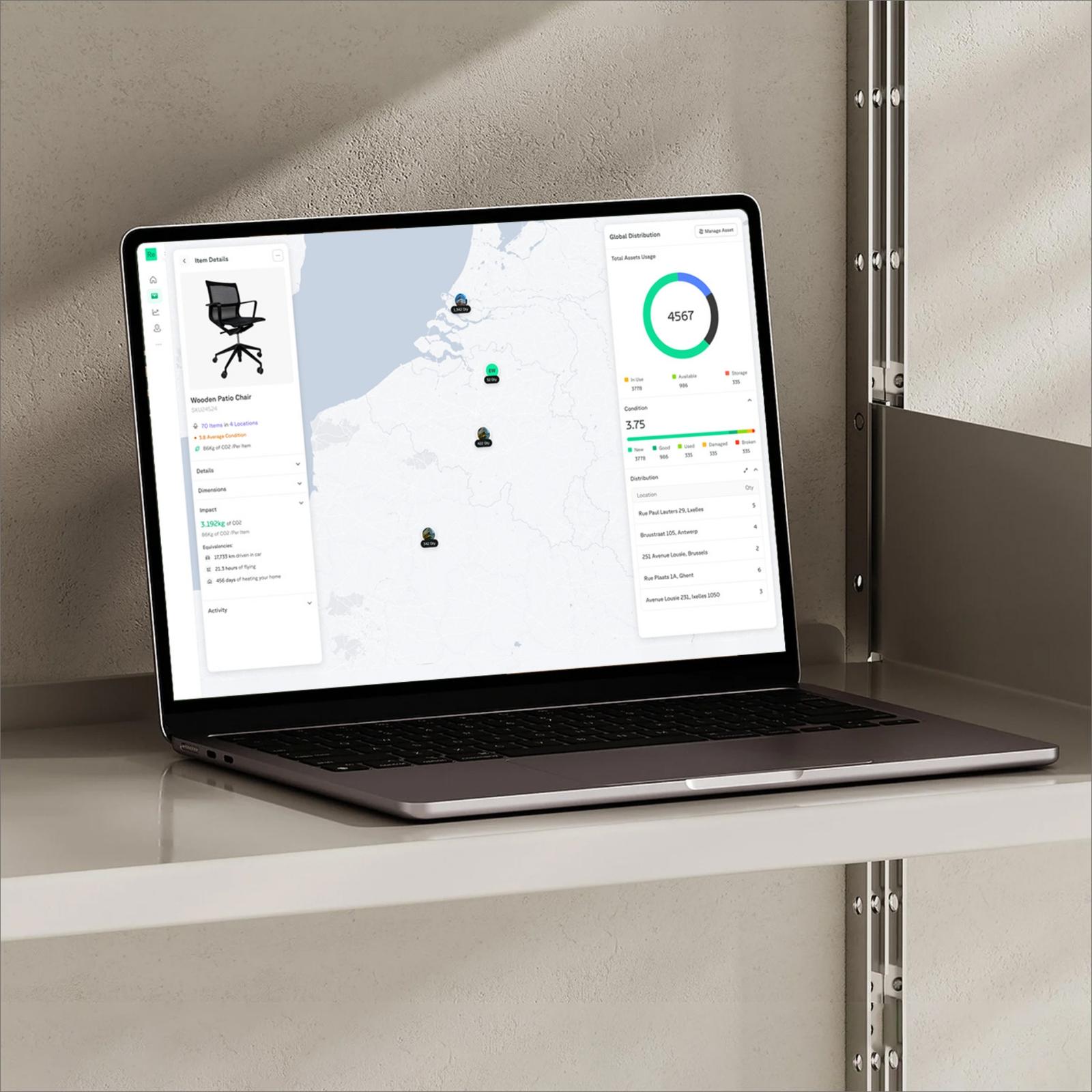
Relieve Furniture helps teams turn physical workspaces into structured furniture data. Inventory Tracking shows what assets exist, where they are located, what condition they are in, how they are being used and which items could be reused before anything new is bought.


Have questions? Our team is happy to help
Problem
That lack of visibility creates hidden costs. Useful office furniture gets bought twice, stored too long, missed during moves or excluded from sustainability reporting. Inventory tracking shows what exists, where it is, what condition it is in, how it is being used and what can happen next. For Relieve, a furniture inventory is the data foundation for circular workplace action: reuse, transfer, resale, donation, recycling, avoided purchases and reporting.
A useful furniture inventory is not just a list of products. It is a working asset record that helps teams see the furniture estate clearly enough to act.
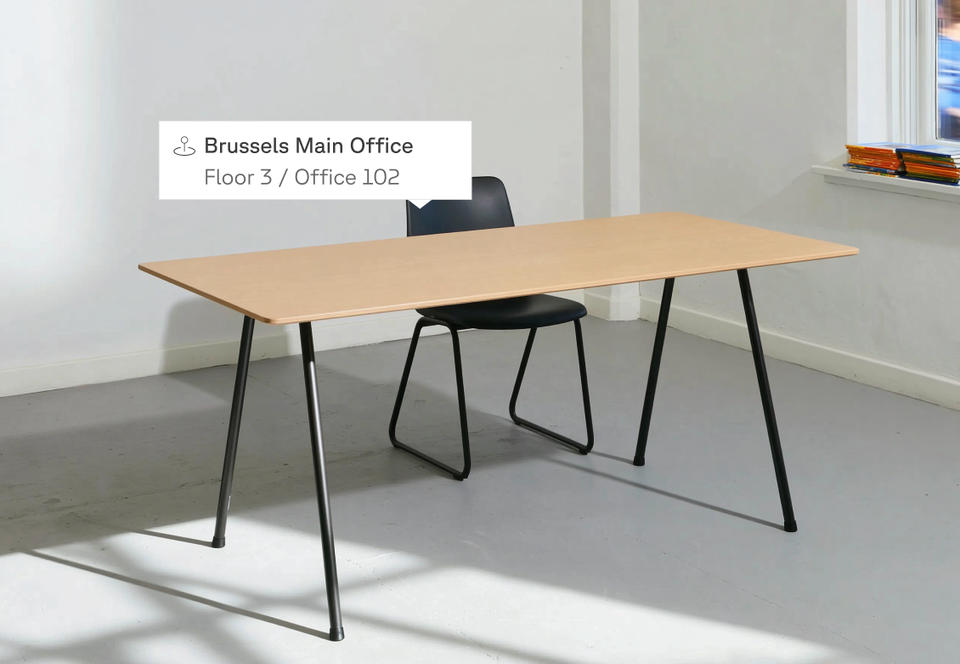
Teams need to know which site, building, floor, room or zone an item belongs to, and whether it is shared, assigned to a team, stored or held for a project.
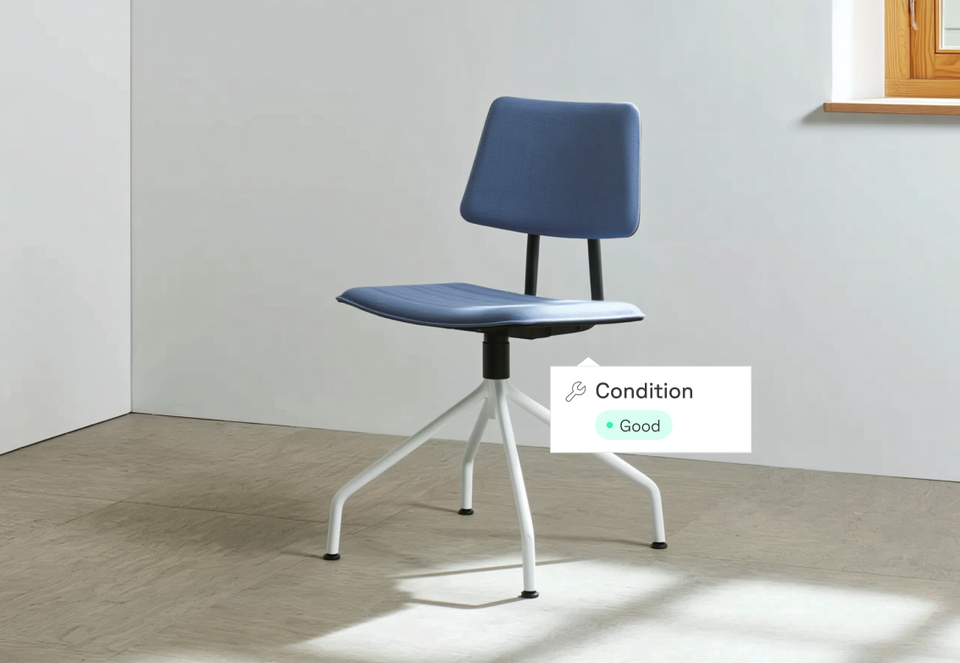
Furniture is only useful if the condition is clear enough to act on. A chair that is ready for reuse, a desk that needs repair and a damaged storage unit should not sit in the same vague category.
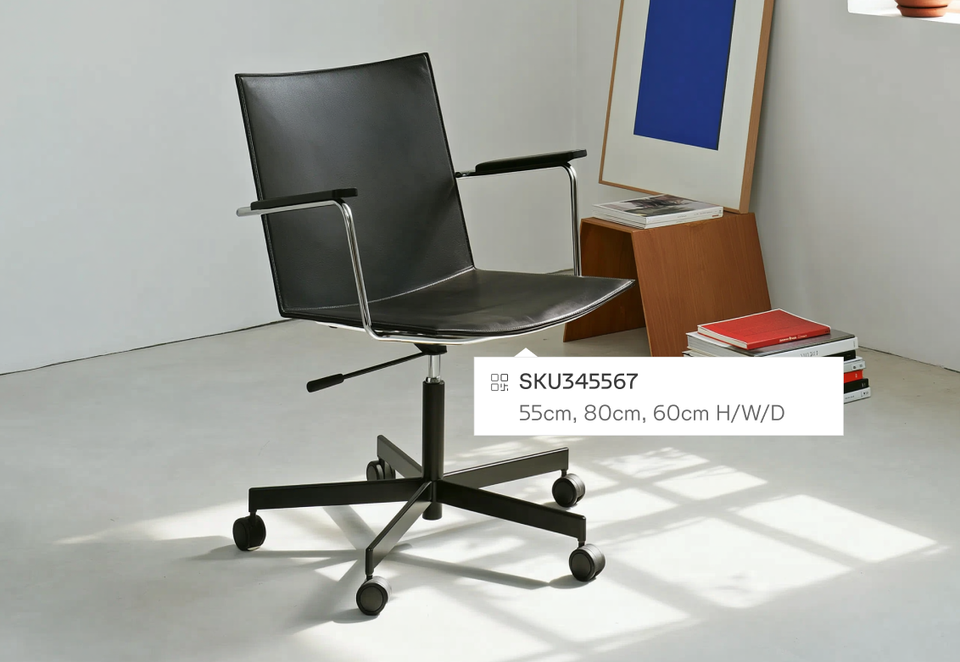
Inventory data should be detailed enough to prevent duplicate buying, but not so complex that it becomes impossible to maintain. The right evidence makes the record easier to trust.
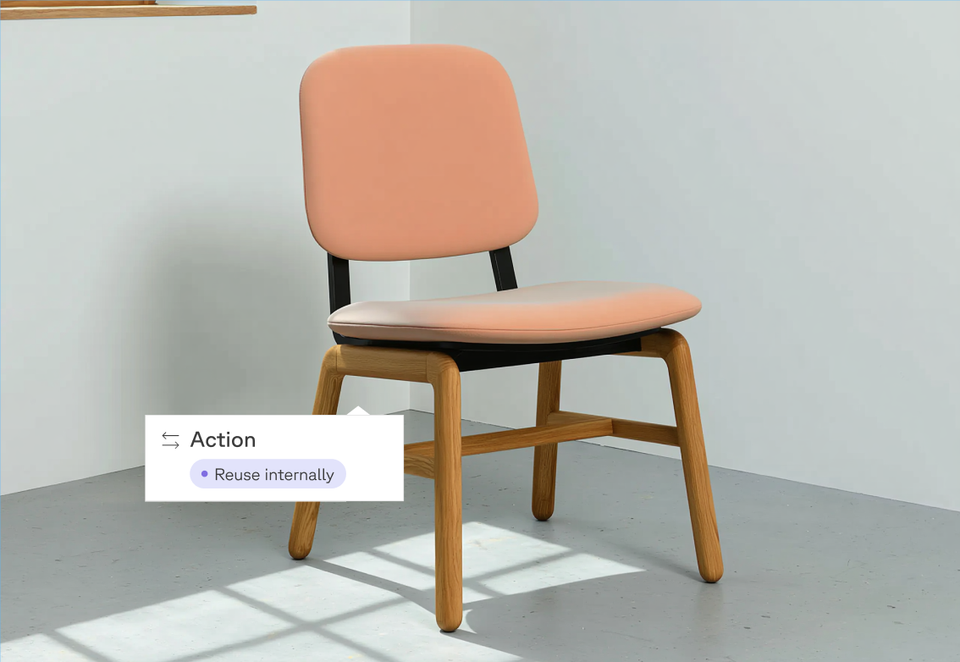
The most useful inventory record answers the next question: what should happen to this furniture and where could it create value?
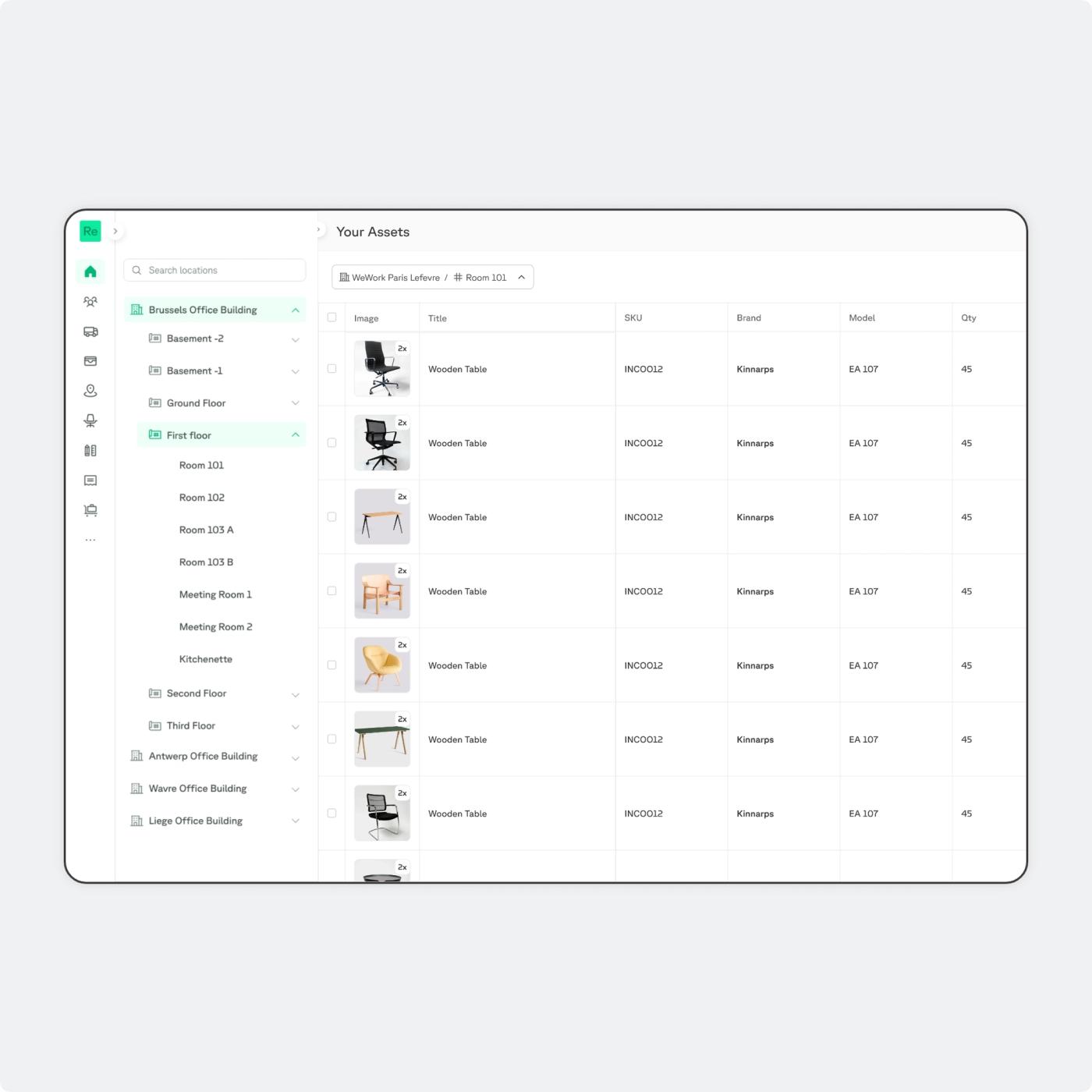
A useful inventory starts in the real workplace, not in a blank database. Furniture has context: a chair might be assigned to a team, a table might be stored for a future project, a set of lockers might be usable but missing from the central record. Relieve helps translate those physical spaces into structured data that people can actually use.
That means capturing the practical evidence behind each record: location, quantity, condition, category, photos, ownership context and next-use status where it is known. Because Relieve also supports the circular work after the record is created, the inventory is shaped around real decisions rather than fields that look tidy but do not help anyone act.
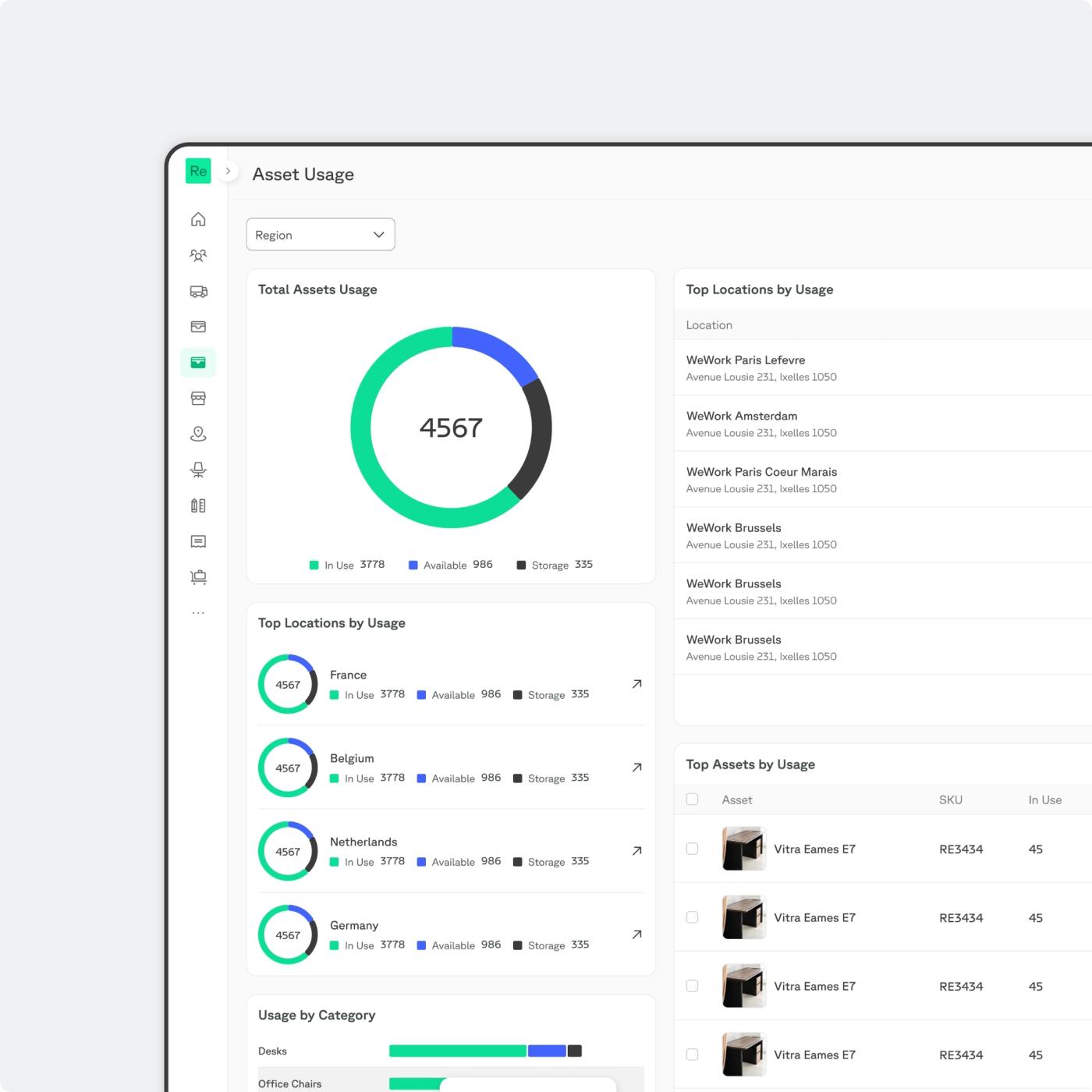
Inventory tracking gives teams a reuse-first check before procurement. If another site, storage area or upcoming clearance already has suitable furniture, Asset Management can make that stock easier to see before a new order is placed.
This is where the data becomes valuable. A facilities team can compare surplus with demand. A workplace team can plan around existing furniture. Procurement can source only the gaps. Sustainability teams can see where reuse was considered before new items were bought.
Relieve starts by understanding why the inventory is needed. A move, clearance, workplace refresh, storage review and portfolio-wide visibility project do not need exactly the same starting point. We define the sites, rooms, categories and level of detail that will make the inventory useful.
The inventory needs to be trusted by the people using it. That means recording categories, quantities, location, condition, usage and supporting evidence in a consistent way. The goal is not to create perfect data for its own sake. The goal is to translate the physical workspace into data your facilities, workplace, real estate and sustainability teams can use.
Furniture data becomes much more useful when teams use the same categories, statuses and location logic. A central record makes it easier to search across sites, detect duplicates, compare surplus with demand and identify what should be reused before anything new is purchased.
Inventory tracking should not end as a static spreadsheet. In Asset Management, the inventory becomes the basis for lifecycle decisions, internal reuse, sourcing gaps, employee offers, resale, donation, recycling and reporting. Visibility is the first step. Better decisions are the point.
Plan an inventory auditStorage areas often hold useful furniture, but they can become invisible quickly. Items are put aside after a move, saved for later, or held because nobody is sure whether they will be needed again. Without a clear record, stored furniture can quietly turn into cost, clutter and duplicate buying.
Inventory tracking helps teams understand what is already in storage, what condition it is in and whether it should be kept, reused, moved, offered, resold, donated, recycled or retired. The goal is not to hold onto everything. The goal is to know what is worth keeping and what should be moved into a better circular route.
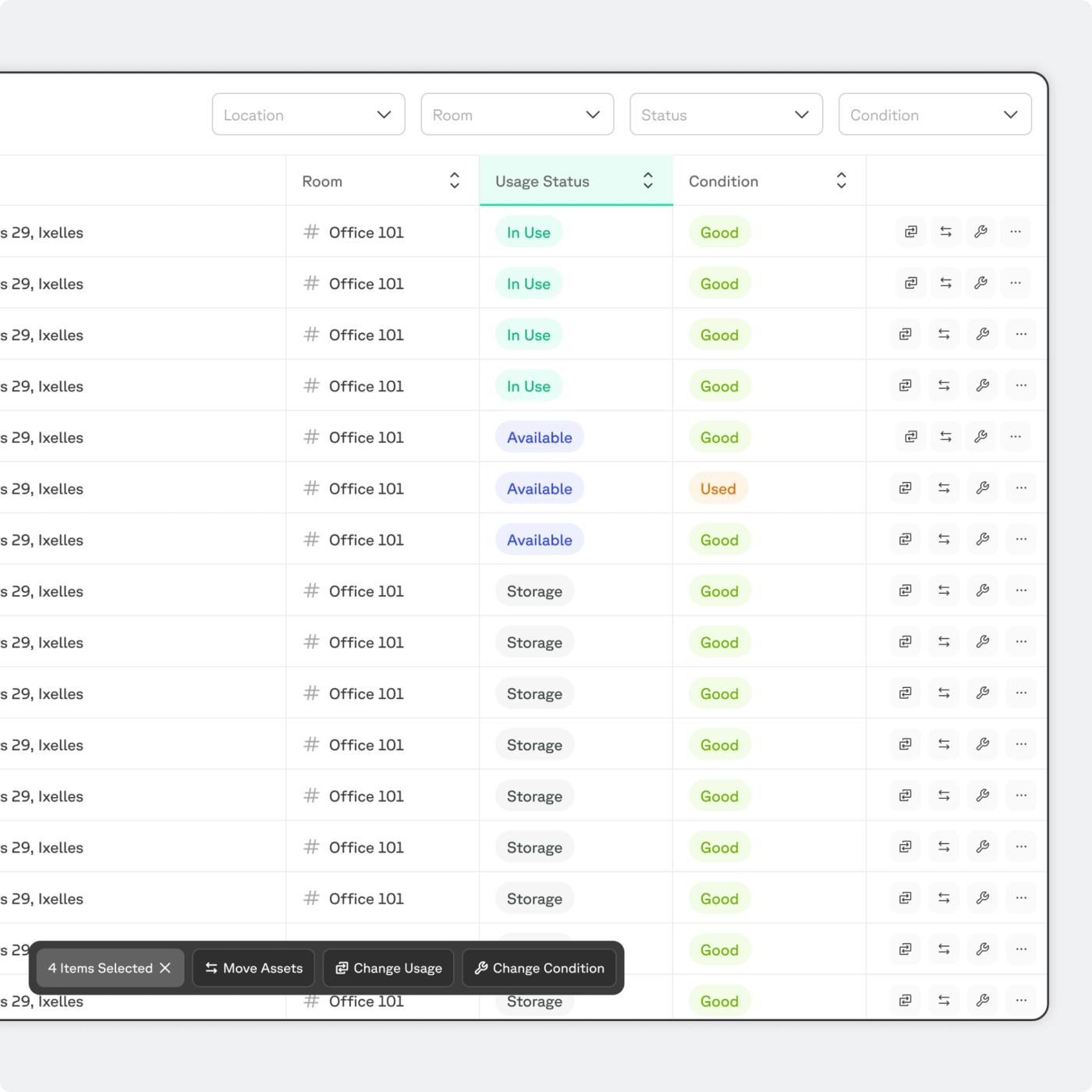
Reporting usually fails when the evidence is missing at the start. If the inventory records category, quantity, condition and location clearly, it becomes easier to explain what was reused, what was transferred, what was made available to employees, and what later moved through resale, donation, recycling or retirement.
That source data also helps separate what is possible from what is proven. Potential reuse can guide decisions before a project moves. Confirmed outcomes can support internal updates and reporting once the furniture has actually been routed.
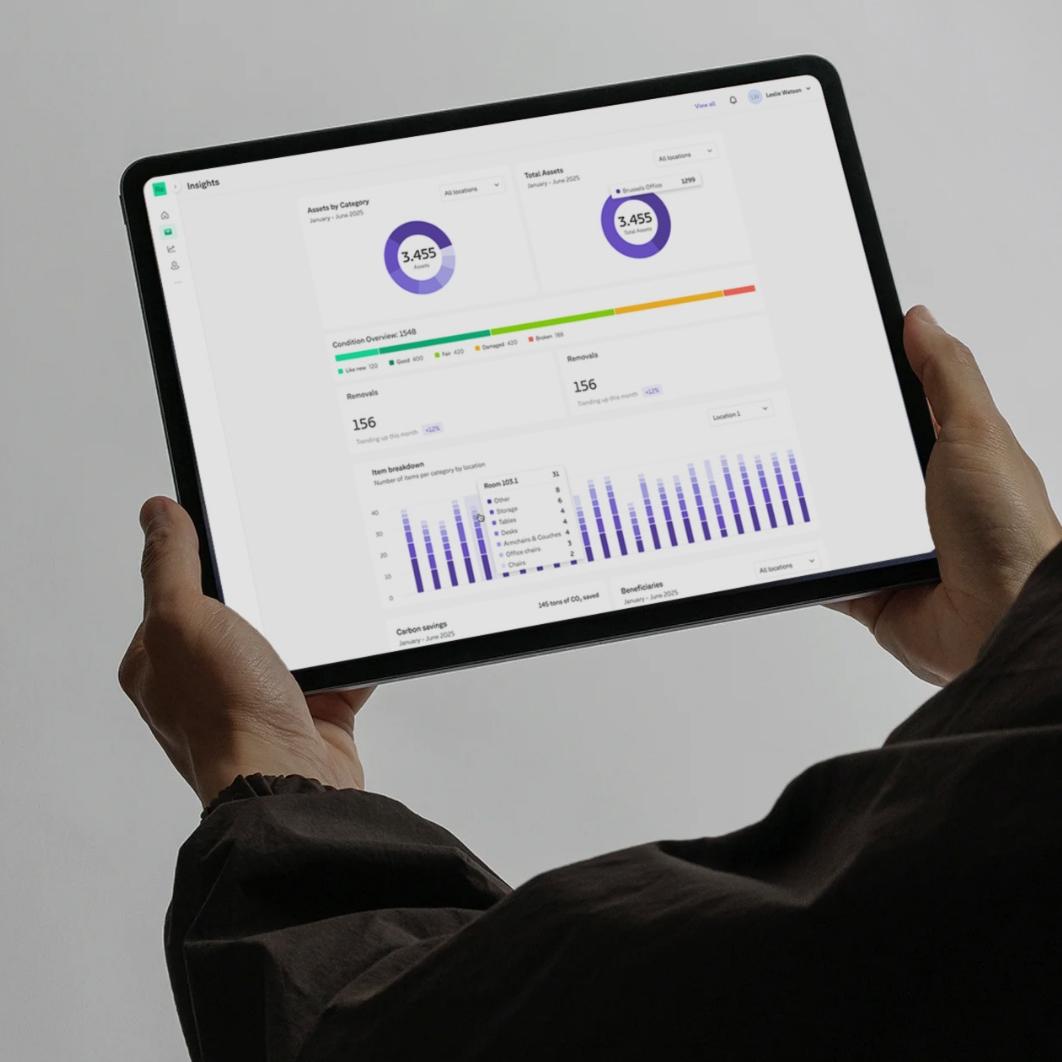
Spreadsheets can be a useful first step. A one-off audit can create a clean snapshot before a move or clearance. But if furniture keeps changing across locations, teams need the inventory to stay alive. That is where Asset Management becomes useful: it keeps furniture records connected to the decisions, circular routes and reporting needs that follow.
| Feature | Relieve | Spreadsheet | One-off inventory audit |
|---|---|---|---|
| Best for | Ongoing visibility across sites | Quick starting list | Project snapshot |
| Data consistency | Standardised for repeat use | Depends on each editor | Structured during the audit |
| Location visibility | Built for multi-site tracking | Manual | Clear at the audit date |
| Condition tracking | Maintained as decisions change | Often inconsistent | Captured once |
| Reuse decisions | Connected to lifecycle workflows | Manual comparison | Possible after review |
| Reporting | Stronger basis for recurring reports | Manual | Useful snapshot |
Asset Management
Inventory tracking is the foundation. Once teams know what exists, the next question is what should happen next. The inventory needs to connect with decisions, not sit as another file that only one person understands.
For teams trying to move, reuse, transfer, offer, sell, donate, recycle or retire furniture,Lifecycle Management turns inventory data into practical workflows.
For teams that need evidence for circularity, CO2, destination or internal reporting,Reporting / ESG explains how furniture data becomes stakeholder-ready information where the data supports it.
For teams that need hands-on help creating or cleaning up a furniture record for an immediate project,Track and Manage Assets is the operational service route.

Tell us which locations, teams, storage areas or furniture groups you need to understand. Relieve will help you scope the inventory, identify the right level of detail and show how Asset Management can keep the data useful over time.