What was reused?
- Relieve
- Asset, location and next-use status
- Risk if missing
- Reuse becomes anecdotal
Asset Management
Relieve Furniture helps teams turn office furniture decisions into reporting evidence. With reliable inventory and lifecycle data, you can show what was reused, where furniture went, how CO2 figures were calculated and which outcomes are ready for internal updates, ESG conversations and stakeholder reporting.


Have a question? Our team is here for you
Problem
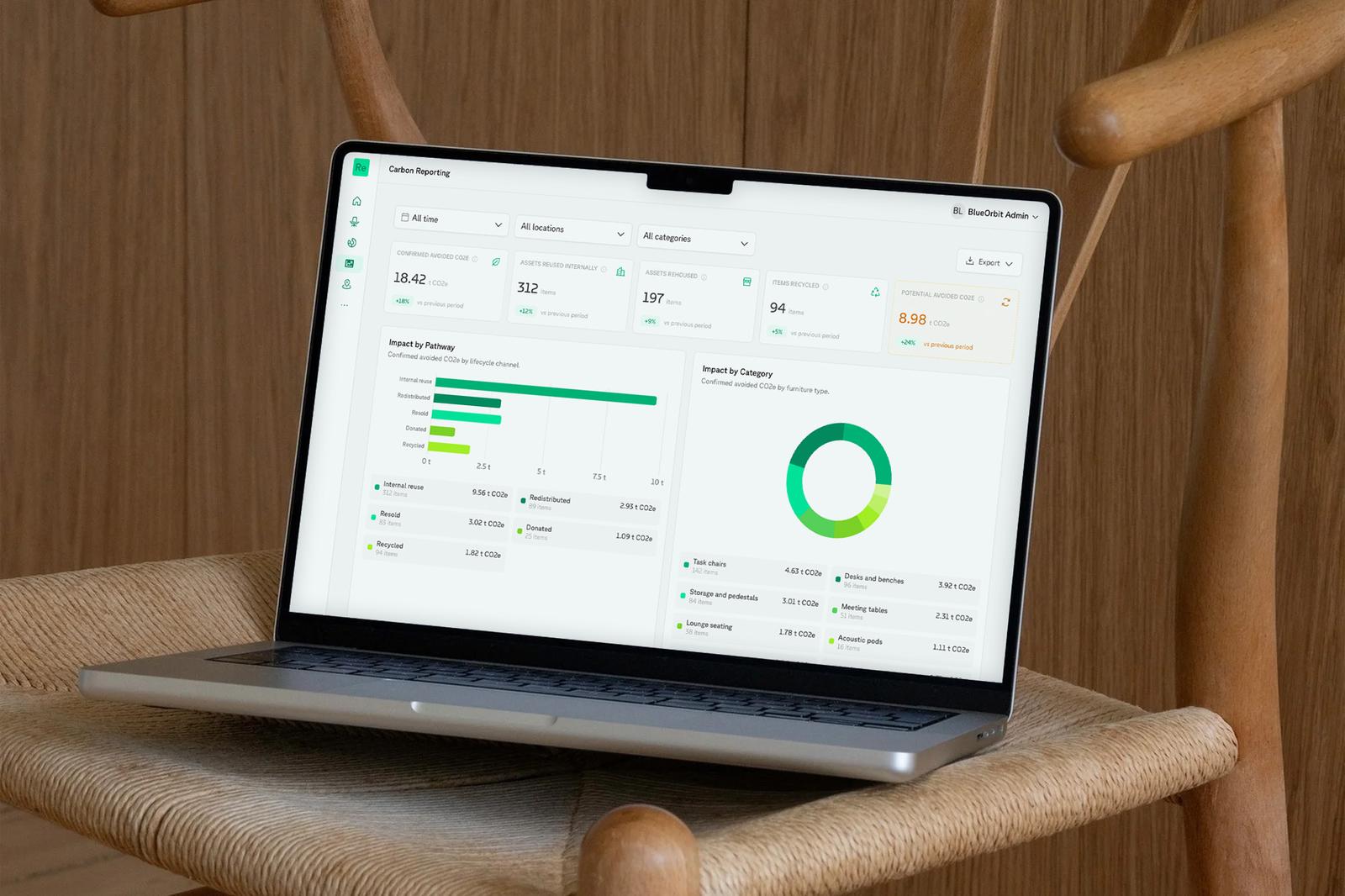
Furniture projects often create reporting value, but the evidence is easy to lose. Items move before destinations are recorded. Reuse decisions are made in emails. Donation, recycling or resale outcomes sit outside the project file. By the time sustainability, finance or leadership asks for an update, the team may know the project was circular without having the data to explain it clearly. Reporting / ESG helps you plan that evidence before it goes missing. It connects the asset record, lifecycle decision and outcome evidence so each report can show what happened, what is still a forecast and what has been confirmed.
Report which furniture stayed in use, moved internally or solved a need in another location before new sourcing was required.
Show whether furniture was kept, reused, transferred, offered, resold, donated, recycled or retired where destination data has been captured.
Where methodology and source data are available, furniture activity can support CO2 reporting. Reliable reporting depends on clear calculation logic, source data, project context and confirmed circular outcomes.
Lifecycle outcomes can help teams explain how furniture decisions supported reuse-first purchasing, value preservation, redistribution and circular procurement goals.
Facilities, finance, workplace, real estate and sustainability teams often need different views of the same furniture activity. Clearer data makes those updates easier to prepare.
Asset data can also help teams find available, stored or removal-marked furniture with high reuse potential before a project becomes waste, cost or new procurement.
Carbon reporting is stronger when the data sits inside the furniture workflow, not in a spreadsheet assembled after the project. Item or category carbon values, quantities and route decisions can travel with the asset record, giving teams a clearer view of potential impact before decisions are final.
That helps you compare reuse, circular sourcing, resale, donation and recycling routes while the project is still live. When outcomes are confirmed, the same records can support CO2 reporting without forcing teams to rebuild the story afterwards.

Asset Management
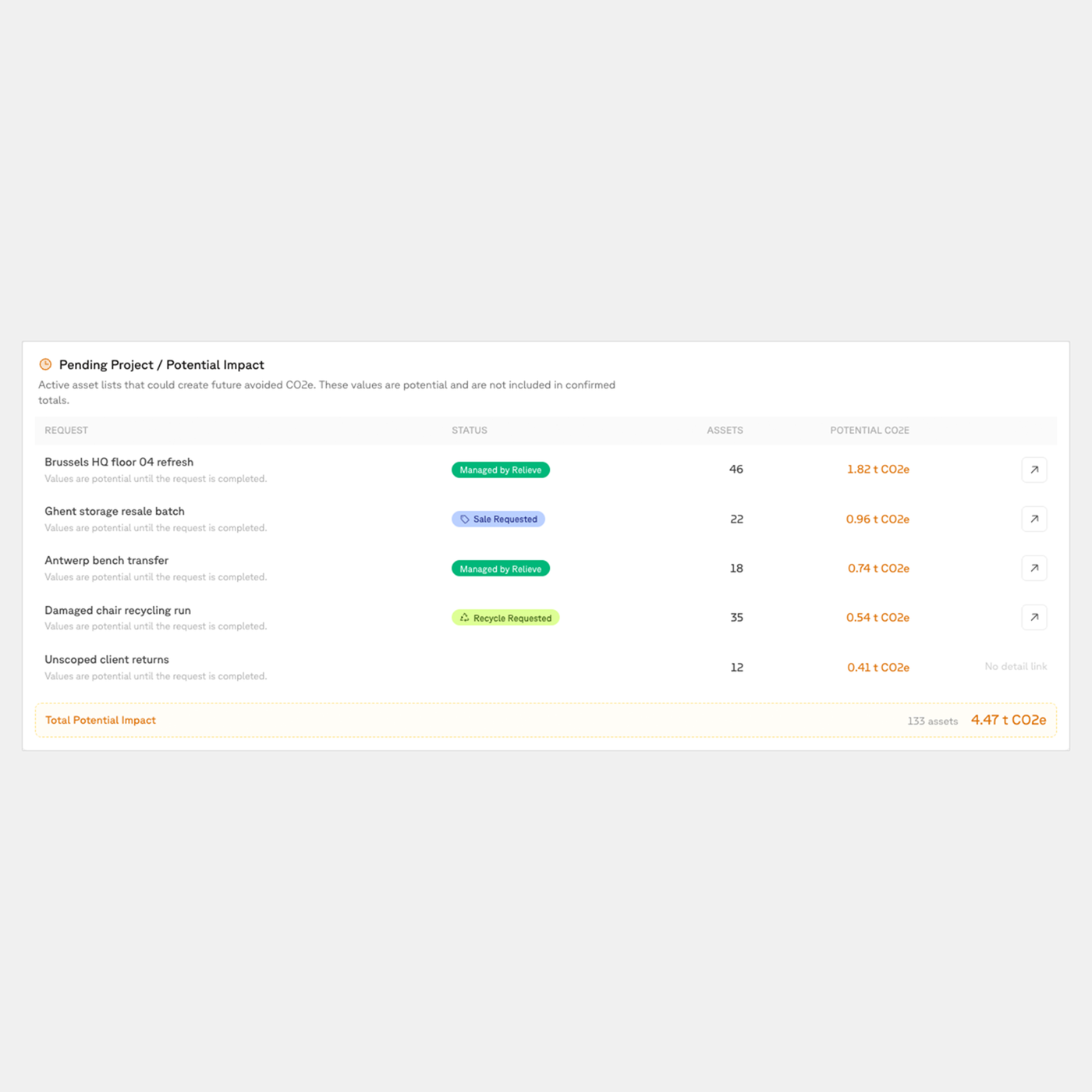
Good reporting separates what might happen from what has happened. Before a project moves, forecast impact can help teams prioritise reuse, resale, redistribution or circular sourcing. After furniture is routed, confirmed quantities, destinations and methods give the report stronger evidence.
That distinction makes the report easier to trust. Stakeholders can see where a figure is a planning estimate, where it is backed by completed activity and where missing data limits the claim.
Asset Management
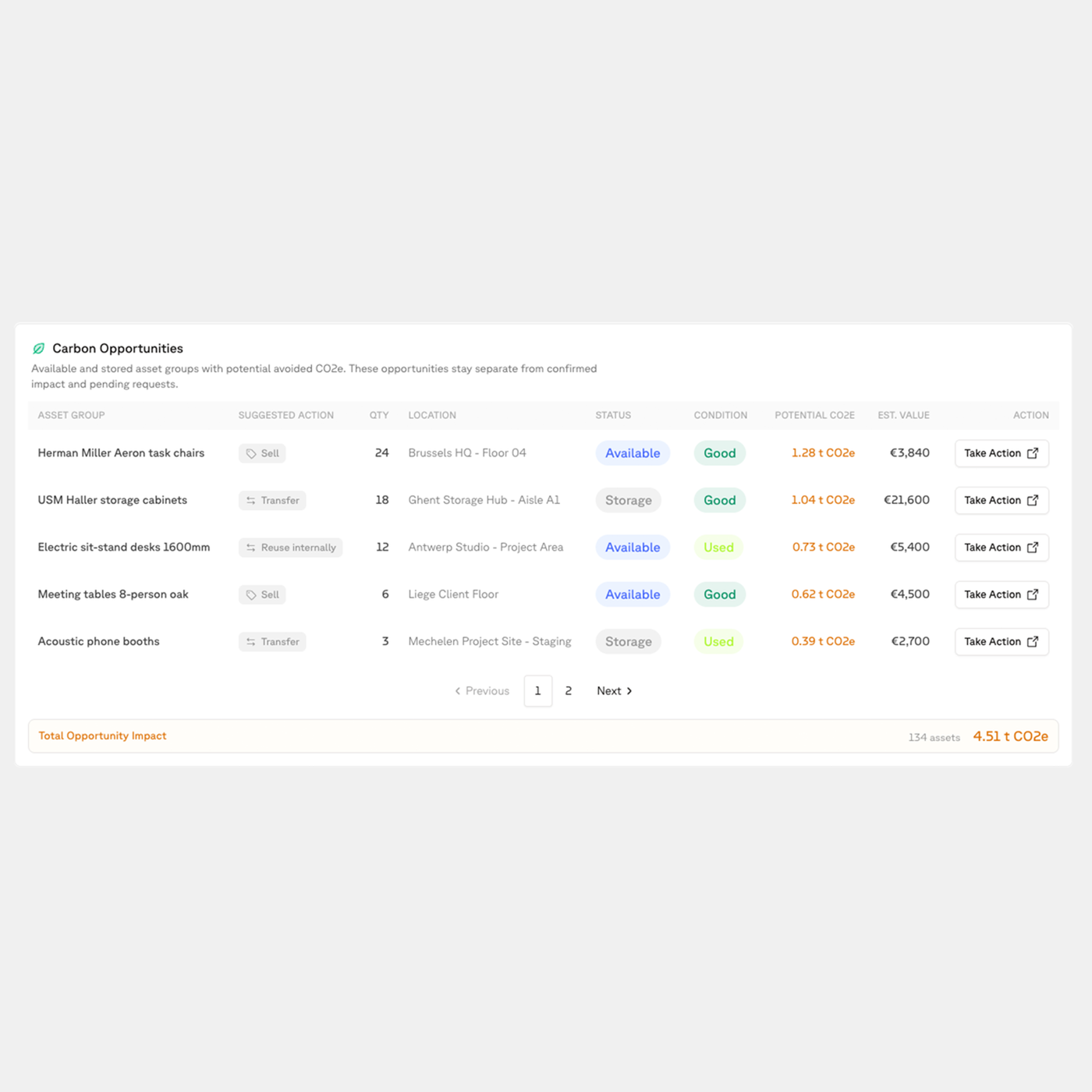
Useful reporting starts early enough to change the outcome. If asset data shows available furniture, stored items or removal-marked stock with high reuse potential, teams can route those items before they become waste, cost or unnecessary procurement.
Relieve helps connect that visibility to practical routes: internal reuse, employee offers, resale, donation, responsible recycling and circular sourcing for any remaining gaps. The result is not only a cleaner report, but better decisions before the report is needed.
Asset Management
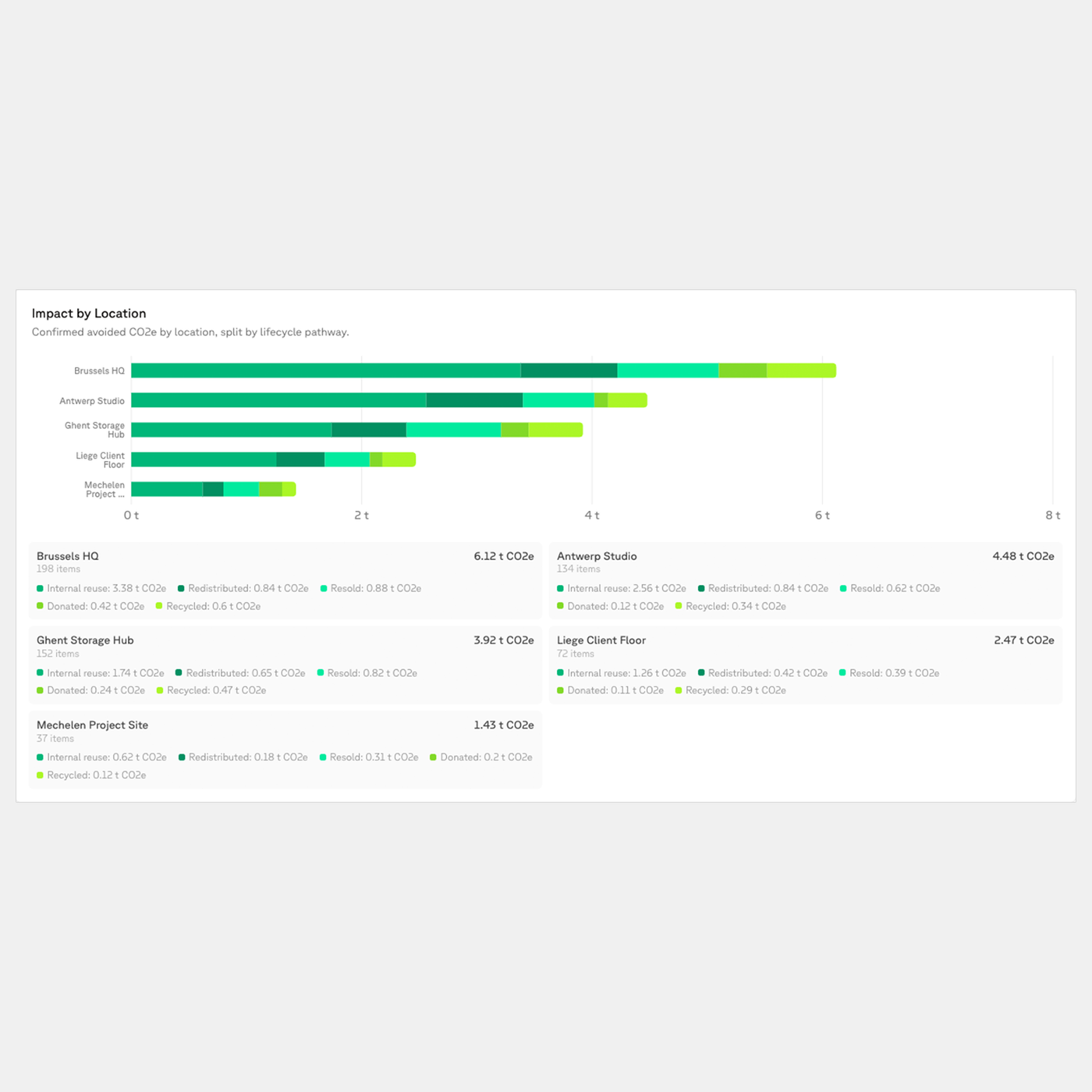
Different stakeholders need different views of the same furniture activity. Sustainability teams may want CO2 and circularity context. Facilities may need destination and location. Finance may need resale value or avoided-purchase context where it can be evidenced. Leadership may need a simple project summary that does not bury the outcome in raw inventory data.
A useful reporting plan groups outcomes by pathway, furniture category, location, project and methodology. That makes the report easier to use internally and easier to repeat across future furniture decisions.
Relieve starts with the question your team needs to answer: reuse, destination, CO2, value, stakeholder update, ESG evidence or a mix of those needs.
Reporting quality depends on the source record. We review available inventory, condition, location, ownership, usage, lifecycle route, destination information and carbon source values where they exist.
If key information is missing, the reporting plan should flag it early. Missing inventory, route or destination data is much easier to fix before a clearance, move or reuse project is complete.
Different outcomes need different evidence. Internal reuse, reallocation, resale, donation, recycling and retirement should not be collapsed into one vague "disposed" status. Carbon information also needs the right context: source value, quantity, route and whether the figure is forecast or confirmed.
The final reporting view should match the audience. Sustainability may need CO2 and circularity context; facilities may need destination and location; finance may need value or avoided-purchase context where data supports it. Stronger reports can break outcomes down by pathway, category, location and methodology.
Build a reporting planThe most useful reporting work starts before the project ends. It defines the information needed, captures it in the right place and avoids overstating what the data can prove. Potential impact can guide action; confirmed outcomes are what make the report credible.
| Feature | Relieve | Risk if missing |
|---|---|---|
| What was reused? | Asset, location and next-use status | Reuse becomes anecdotal |
| Where did surplus furniture go? | Destination and route records | Outcomes are hard to explain |
| Can we discuss CO2 impact? | Methodology, source data and confirmed outcomes | Claims may be unsupported |
| What should stakeholders see? | Audience, scope and project context | Reports become too broad or vague |
| Can we repeat this next time? | Standard fields and statuses | Every report starts again |
If the blocker is missing or unreliable source data, start with Inventory Tracking. A report is only as strong as the asset records behind it.
If the blocker is that furniture outcomes are not structured, Lifecycle Management helps turn reuse, transfer, employee offer, resale, donation, recycling and retirement decisions into clearer workflows.
If you are already planning a move or clearance, Clear and Move can help make destination and reporting needs part of the operational project.

Tell us what you need to report, what project or portfolio it relates to, and what data you already have. Relieve will help you build a reporting plan that connects carbon and circularity claims to the evidence behind them.