Setup speed
- Relieve
- Structured
- Spreadsheet
- Fast
- No active tracking
- None
Service
Relieve Furniture helps teams create and use furniture asset records before decisions get expensive. We identify what you own, where it is, what condition it is in and what should happen next, so moves, reuse projects, sourcing gaps and ESG updates are easier to manage.


Need more information? Talk to an expert for free
What changes
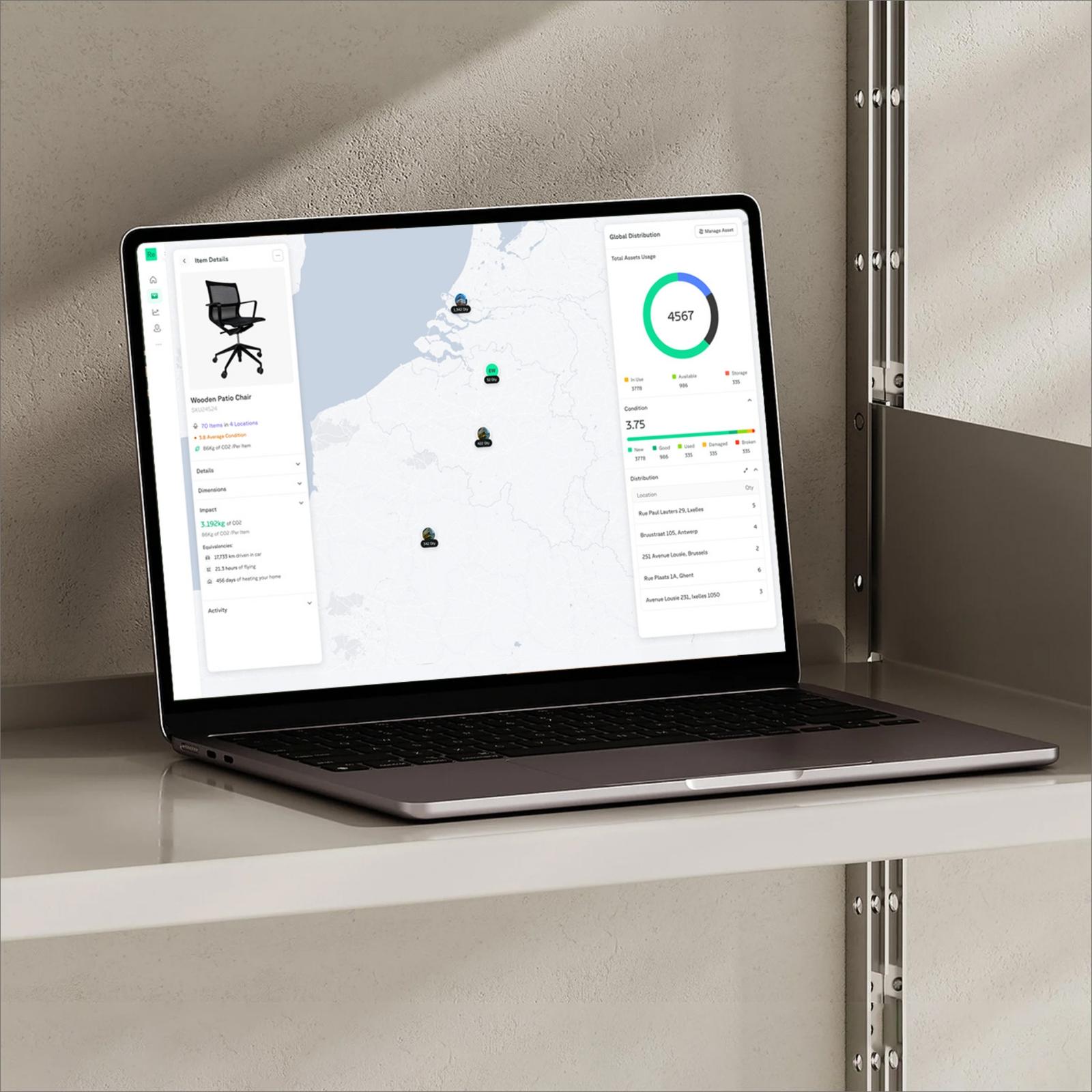
Most organisations have more furniture than they can see clearly. Chairs move between floors. Meeting tables are stored after a restack. Desks sit in one site while another team buys new. Old spreadsheets fall out of date. By the time a move, clearance or audit begins, nobody has a reliable answer to a basic question: what do we already have? That lack of visibility creates avoidable cost. Useful furniture is bought twice, stored too long, discarded too quickly or missed entirely during ESG reporting. Track and Manage Assets is the operational service that gives furniture a working record, so each item can have a better next-use decision.
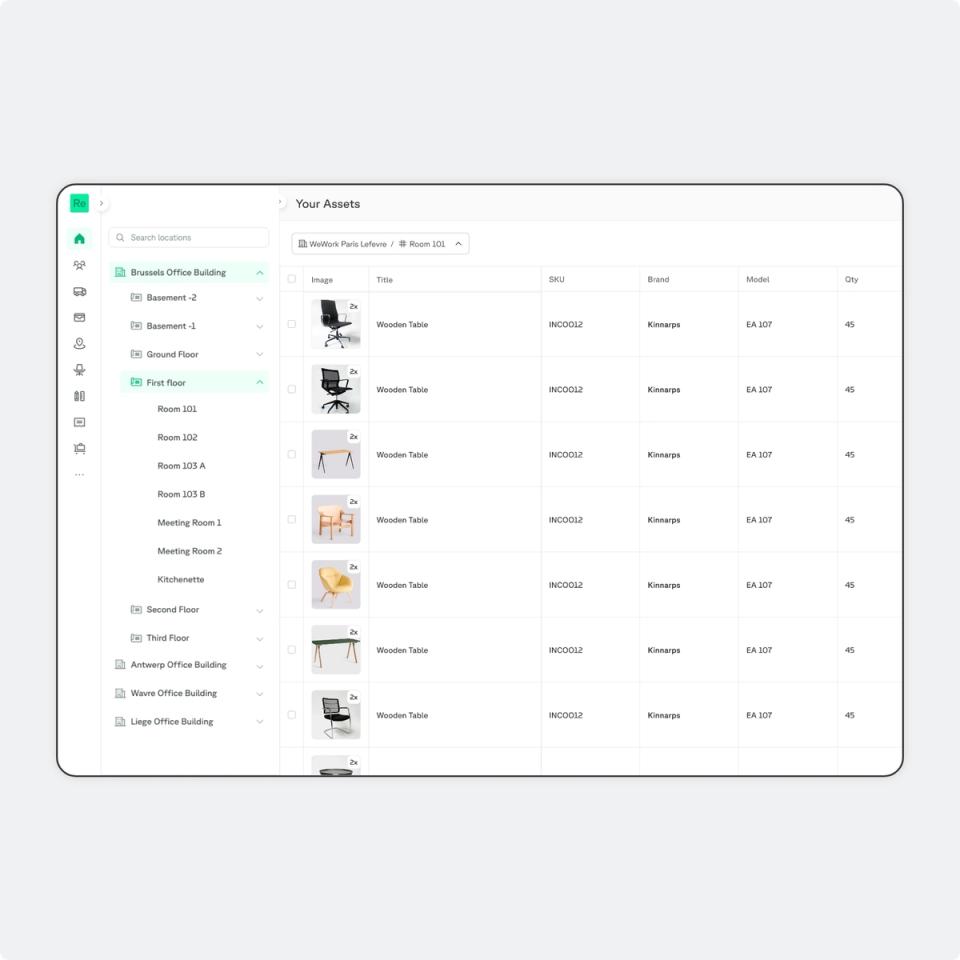
We start by identifying the furniture that matters: category, quantity, location, condition and ownership context. The goal is not to create data for its own sake. The goal is to create a practical asset view your team can act on.
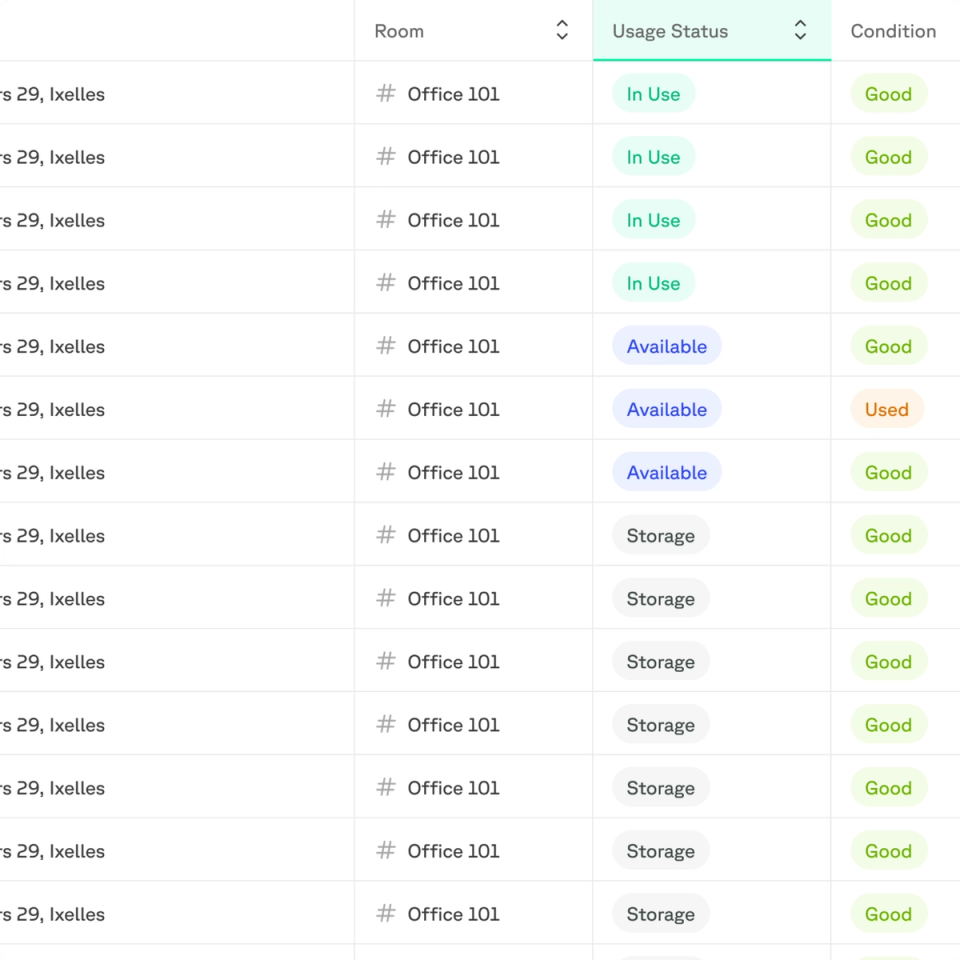
Furniture tracking should answer operational questions. Can this item move? Should it be reused elsewhere? Is it ready for resale? Does it need repair? Should it be recycled?
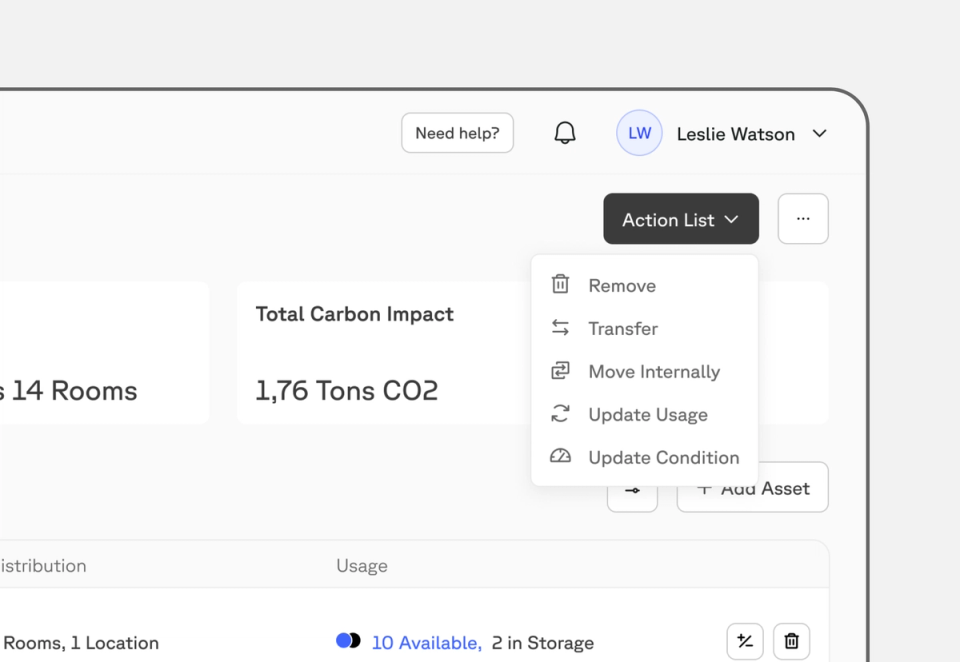
Once assets are visible, Relieve helps route them through the right next step. That could mean supporting an office move, preparing surplus stock for resale, sourcing missing pieces, or documenting what was recycled.
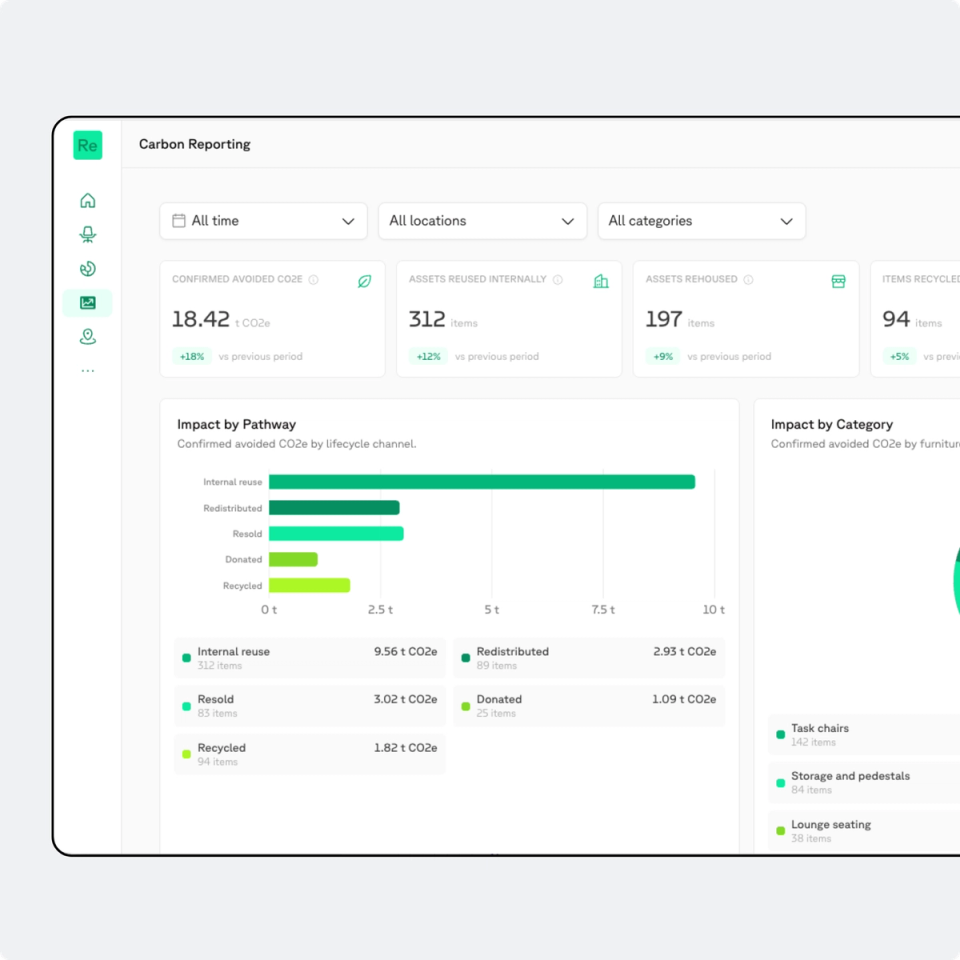
Facilities and sustainability teams need to explain what happened. Relieve can help turn asset decisions into reporting on reuse, resale, donation, recycling and CO2 impact where data is available.
Spreadsheets are not wrong. They are often the first step. The issue is that furniture changes faster than spreadsheets get updated. Relieve helps make asset data operational for a project, move, clearance or reuse decision, not just administrative.
| Feature | Relieve | Spreadsheet | No active tracking |
|---|---|---|---|
| Setup speed | Structured | Fast | None |
| Long-term accuracy | Built around updates and decisions | Hard to maintain | Poor |
| Location visibility | Centralised view | Manual | Unknown |
| Condition data | Standardised enough to act on | Inconsistent | Missing |
| Lifecycle routing | Connected to reuse, resale and recycling | Separate process | Reactive |
| ESG reporting | Supported where data is available | Manual | Weak |
Furniture tracking is most valuable before a project begins. Before a move, it shows what should travel to the new space, what can be reused elsewhere, what can be sold, and what needs responsible recycling. Before a fit-out, it shows what furniture already exists before new items are sourced. That is how asset management reduces waste: not through a dashboard alone, but by helping teams make better decisions earlier. For multi-site teams, the same logic can apply across the whole portfolio. A surplus batch in one building can become the sourcing answer for another. A storage area can become a reuse pool instead of a cost centre. A planned clearance can become a redistribution project because the inventory is already clear. If those decisions need to stay live over time, the next step is the Asset Management platform.
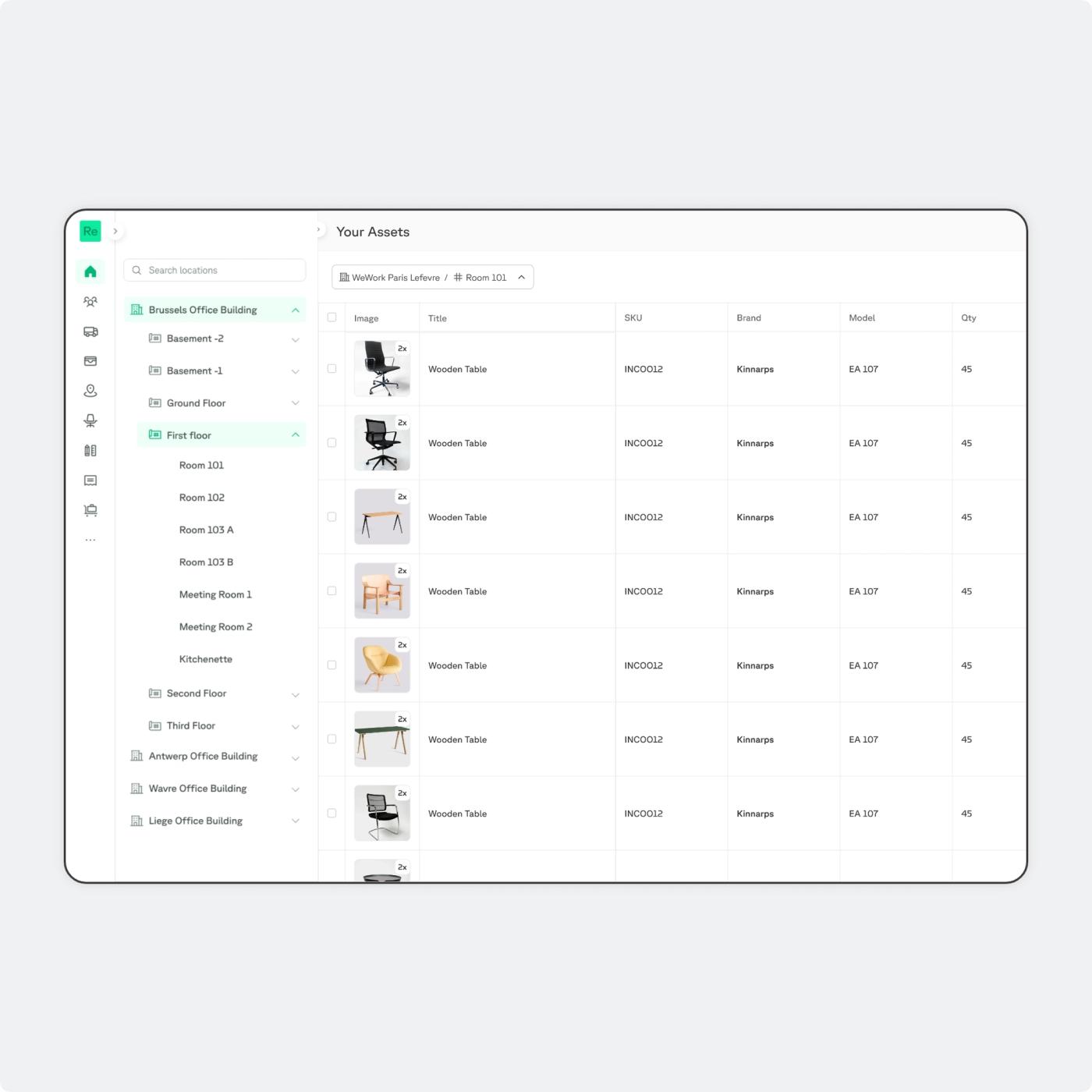
Sustainability teams are often asked to report furniture outcomes without being given reliable data. Asset tracking closes that gap. If the location, condition and destination of furniture are recorded, it becomes much easier to show how items were reused, redistributed, sold, donated or recycled. Relieve can connect asset tracking with CO2 and ESG reporting where data is available. That gives teams a clearer way to show progress without reconstructing the story months later.
Start with visibility. Tell us what sites, teams or furniture groups you need to manage, and Relieve will help you turn furniture data into better decisions.